Most drivers know about engine air filters, but far fewer pay attention to the cabin air filter — the one that cleans the air you breathe inside the car. It’s a small, inexpensive component that plays a surprisingly big role in comfort, health, and even your HVAC system’s lifespan.
What Does a Cabin Air Filter Do?
Located behind the glove box or under the dashboard, the cabin air filter traps dust, pollen, mold spores, exhaust fumes, and other airborne particles before they enter the passenger compartment. On vehicles with automatic climate control, it also helps maintain sensor accuracy for temperature and humidity readings.
Some filters include activated carbon layers that absorb odors and harmful gases like ozone and nitrogen oxides. Others are simple paper or synthetic media designed only for particulate filtration.
When Should You Replace It?
There’s no single answer, but a good rule of thumb is every 12,000 to 18,000 miles (roughly 20,000 to 30,000 km) or once a year, whichever comes first. However, your actual replacement interval depends heavily on where and how you drive:
- City driving in heavy traffic – more exhaust exposure, shorter life
- Rural or agricultural areas – more dust and pollen
- High pollution regions – accelerated clogging
- Frequent use of recirculation mode – less outside air drawn in, but still needs regular changes
- Smoking or pets inside the vehicle – significantly faster contamination
Check your owner’s manual for the manufacturer recommendation, but treat it as a minimum — if you drive in dirty conditions, cut the interval in half.
Five Signs Your Cabin Air Filter Needs Changing
- Reduced airflow from vents – Even at max fan speed, air feels weak. This is the most common symptom.
- Musty or unpleasant smell when turning on the AC or heat – Moisture and trapped organic matter breed bacteria and mold.
- Excessive fogging on the inside of windows – A clogged filter restricts proper defogging performance.
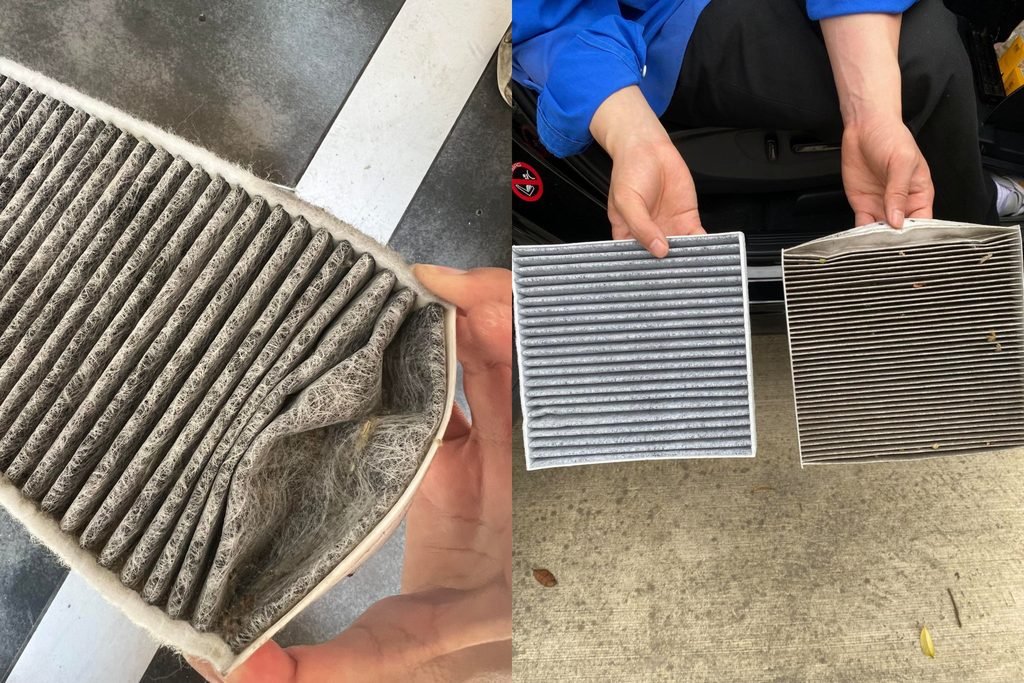
- Visible dirt or debris around the filter housing – If you pull the old filter and see leaves, bugs, or thick black dust, it’s overdue.
- Increased allergy symptoms while driving – Sneezing, watery eyes, or stuffy nose inside the car can mean the filter is no longer trapping allergens effectively.
What Happens If You Never Change It?
Ignoring the cabin filter doesn’t just affect air quality. Over time, a completely blocked filter forces the blower motor to work harder, which can lead to premature failure. The evaporator coil may also get dirty faster, reducing AC efficiency and potentially causing foul odors that are much harder to remove.
From a health perspective, the filter is your last line of defense against fine particulates (PM2.5), diesel soot, and pollen. Once it’s saturated, these contaminants bypass the filter and circulate freely inside the cabin.
Types of Cabin Air Filters
- Standard particulate filter – Traps dust, pollen, and larger particles. Lowest cost.
- Activated carbon filter – Adds odor and gas absorption. Slightly more expensive, recommended for urban drivers.
- Combination / multi-layer filter – Often includes a pre-filter layer, electrostatic media, and carbon. Best overall protection.
- HEPA-type filter – Captures finer particles (down to 0.3 microns). Rare as OEM but available as aftermarket upgrade.
Always check your vehicle’s compatibility before buying — not all cars accept thicker carbon or HEPA filters due to space constraints.
How to Replace It Yourself (General Guide)
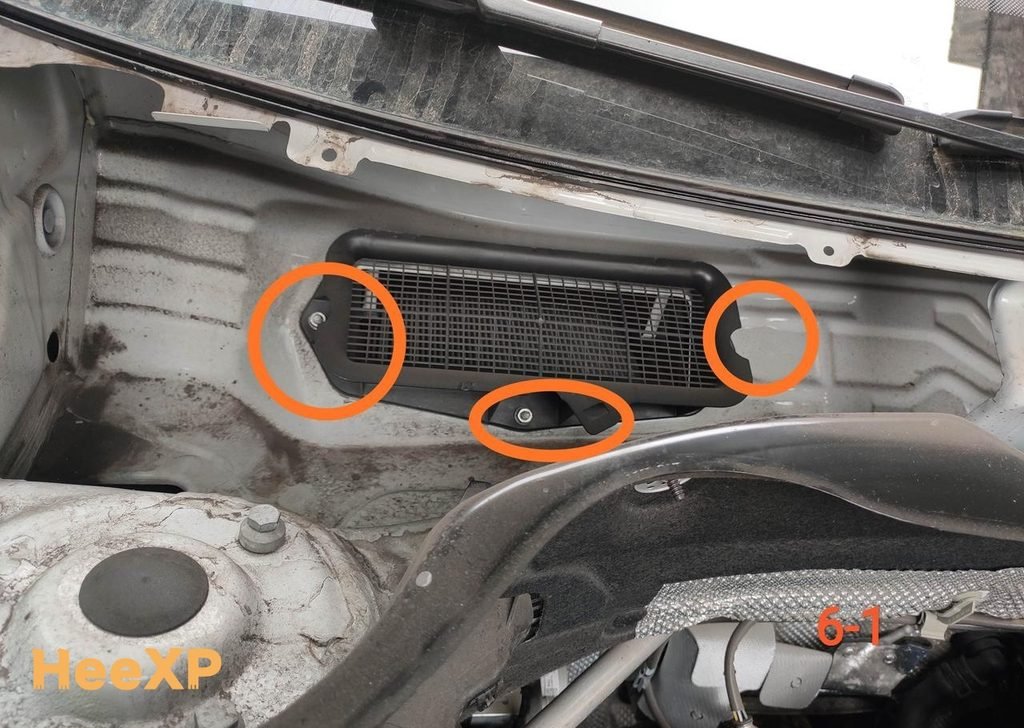
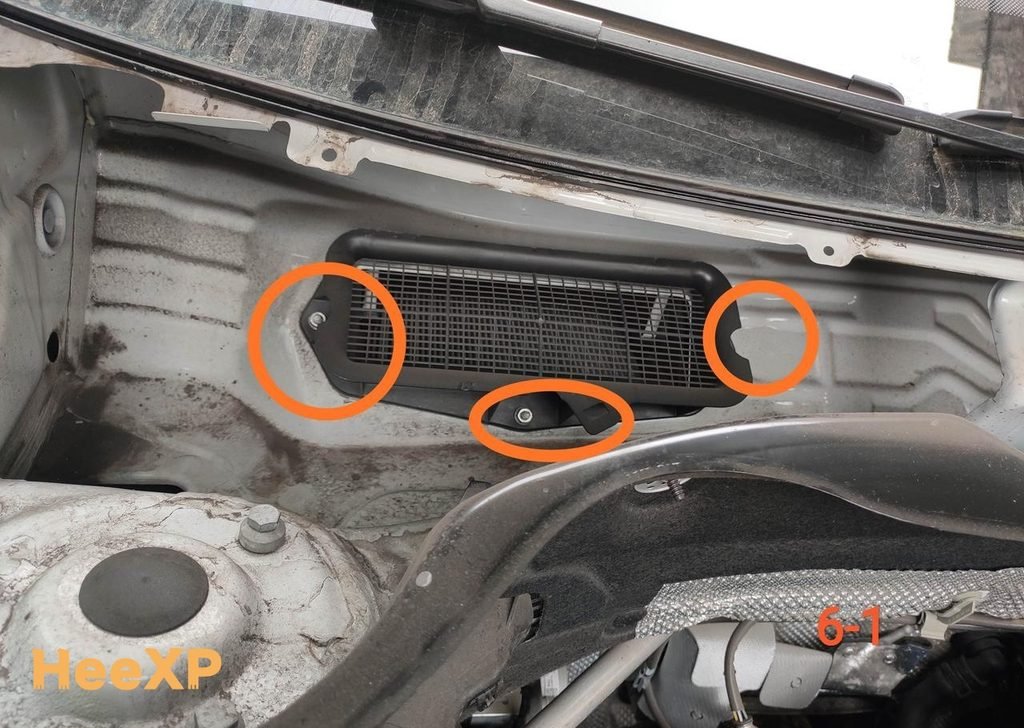
- Locate the filter housing – typically behind the glove box, sometimes under the hood near the windshield.
- Remove the glove box (if necessary) – usually held by clips or screws; consult your vehicle manual.
- Slide out the old filter – note the direction arrow printed on the side (airflow direction).
- Inspect the housing for debris or moisture; clean gently with a vacuum if needed.
- Insert the new filter with the arrow pointing the same way as the old one.
- Reinstall the glove box and test airflow.
The whole job takes 5–15 minutes on most vehicles. No tools required beyond maybe a screwdriver or trim tool.
Seasonal Tips
- Spring – High pollen season; consider replacing before allergy season peaks.
- Summer – Heavy AC use; a fresh filter improves cooling efficiency.
- Autumn – Leaves and debris can block external intake; check the filter after fall.
- Winter – Defogging relies on good airflow; a clogged filter makes window clearing slower and more dangerous.
Bottom Line
Your cabin air filter is one of the cheapest and easiest maintenance items on any car, yet it directly affects the air you and your passengers breathe every day. Replacing it annually (or sooner in tough conditions) costs little and pays back in better comfort, fewer allergies, and longer HVAC life. If you can’t remember the last time yours was changed, now is the perfect time to check.