
Chapter 1: Wiper Blade Structure & Working Principle
1.1 Basic Construction:
Modern wiper blades consist of three main components:
- Rubber element (wiper lip): The part that contacts the glass directly, responsible for removing water film and debris. It usually contains a graphite coating to reduce friction.
- Frame / spring steel: Provides structural support, ensuring even pressure distribution across the curved windshield. Boneless blades rely on a single high-tension spring steel strip; framed blades use multiple pressure points.
- Connector (adapter): Links the wiper arm to the blade. Different vehicles require different connector types (e.g., U-hook, side-pin, bayonet).
1.2 How It Works
The wiper motor drives the arm in a reciprocating motion, sliding the rubber lip across the glass. Key factors include:
- Pressure distribution: Ideally, pressure along the entire lip should be uniform (approx. 15–25 N/m). Too much pressure causes noise and premature wear; too little results in streaking.
- Attack angle: The angle between the lip and glass is typically 45°–60°. A correct attack angle ensures consistent wiping direction and smooth reversal.
- Recovery speed: The elasticity of the rubber determines how quickly it returns to shape, adapting to high-frequency oscillation (up to 60 cycles per minute).
Chapter 2: Common Problems & Root Causes
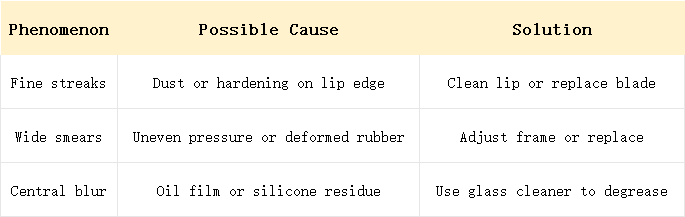
2.1 Streaks & Smearing
2.2 Chattering & Noise
- Chatter: Intermittent skipping of the lip across the glass, producing a “clicking” sound. Common causes: wax or silicone on glass, hardened rubber, insufficient arm spring tension.
- Squeaking: High-pitched noise, often due to excessive friction (lack of lubrication or dry rubber).
- Rubbing noise: Low, continuous sound, possibly from aged rubber losing elasticity or a bent frame.
2.3 Poor Wiping Performance
- Water film remaining: The lip edge is worn and cannot cut through the water film. Check if the edge has become rounded.
- Snowflake pattern: Localized damage or embedded debris in the rubber.
- Band-shaped residue: Frame pressure point failure causing localized lifting.
Chapter 3: Proper Usage Habits
3.1 Never Dry-Wipe
Using wipers on a dry windshield instantly dulls the rubber edge and can scratch the glass. Always spray washer fluid or wet the glass before activating the wipers.
3.2 Winter Operation Tips
- When ice or snow covers the windshield, manually clear it first. Never force the wipers — this can burn out the motor or tear the rubber.
- Use winter-grade washer fluid (freezing point below local minimum temperature) to prevent nozzle freeze.
- Lift the wiper arms off the glass when parking overnight in freezing conditions.
3.3 Summer Protection
- Prolonged sun exposure accelerates rubber aging. Park in shade or use a sunshade whenever possible.
- Regularly clean organic residues like tree sap and bug splatters from the rubber — these substances can chemically degrade the rubber.
3.4 Glass Cleaning Frequency
- Thoroughly clean the windshield with a dedicated glass cleaner at least once a month to remove oil film and fine particles.
- Apply a de-greaser/decontaminant product quarterly to restore hydrophobic performance.
Chapter 4: Maintenance & Care Techniques
4.1 Rubber Lip Cleaning
- Tools: Soft cloth, warm water, mild detergent (or a small amount of rubbing alcohol).
- Method: Lift the wiper arm, wipe the entire rubber lip with a damp cloth to remove dust and grease. Avoid pulling or stretching the rubber.
- Frequency: Every two weeks, or during each car wash.
4.2 Glass Surface Treatment
- Oil film removal: Use a dedicated oil-film remover or fine abrasive polish. Apply in circular motions with a sponge, then rinse thoroughly.
- Hydrophobic coating: Products like Rain-X cause water to bead and roll off, reducing reliance on wipers. Note: Allow coating to cure (typically 24 hours) before using wipers.
4.3 Wiper Arm Spring Tension Check
- Lift the wiper arm about 30 cm and release it. It should return smoothly within 1–2 seconds. Too fast indicates weak spring tension; too slow suggests binding.
- Use a spring scale to measure pull force: Most passenger car wiper arms exert approximately 12–18 N at vertical position. Out-of-range values require adjustment or spring replacement.
4.4 Seasonal Replacement Reminder
- Inspect wiper condition every six months (spring and autumn).
- In rainy climates, replace before the monsoon season begins.
- In cold regions, switch to winter-specific blades (with rubber boot cover) before winter sets in.
Chapter 5: When to Replace Wiper Blades?
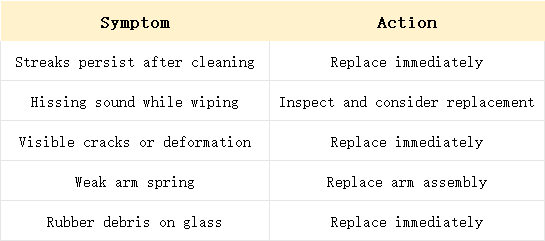
5.1 Clear Signs
5.2 Recommended Replacement Interval
- Moderate climate (temperate): Replace every 12 months.
- Hot/high UV regions (tropical, desert): Replace every 6–9 months.
- Severe cold (arctic/subarctic): Replace every 9–12 months, inspect after winter.
- Heavy usage (rainy/snowy): Replace every 6 months.
Chapter 6: Professional Tips & Common Misconceptions
6.1 Myth #1: More Expensive = Better
Not necessarily. Choose blades based on vehicle type, climate, and usage habits. For example, boneless blades excel at high speeds but may freeze more easily in snowy regions compared to framed blades. Premium silicone blades last longer but demand cleaner glass surfaces.
6.2 Myth #2: Replace Only When Completely Useless
Waiting until complete failure risks scratching the glass. Replace as soon as minor streaking appears.
6.3 Pro Tip: Extend Wiper Life
- Rinse the rubber lip with washer fluid during every car wash.
- Avoid prolonged sun exposure on the blades (lift arms when parked).
- Use high-quality washer fluid with lubricants, never plain water or cheap concentrate.
- Regularly remove debris like leaves and sand trapped under the wiper arms.
6.4 About Silicone Blades
Silicone blades offer superior temperature tolerance (-50°C to 200°C) and longer lifespan (up to 2–3 years), but may require a break-in period (about 200 wipes) during which slight noise may occur. Additionally, silicone deposits a microscopic hydrophobic layer on the glass, improving water beading.
Conclusion
As small as they seem, wiper blades are critical to safety. By understanding how they work, adopting good usage habits, performing regular maintenance, and replacing them at the right time, you can always maintain a clear view. For B2B customers, supplying high-quality blades along with professional care guidance is key to building lasting trust.
About the Author:
This article is written by the HeeXP team. We specialize in the research, development, and supply of small automotive and motorcycle accessories, and are committed to providing reliable products and professional technical support to customers worldwide.