
For motorcycle parts importers, distributors and repair shops, the chain and sprocket kit is one of the highest-repeat-demand categories in the drivetrain segment. But it is also one of the most commonly mis-specified products: buyers choose by displacement only, mix pitch and inner width, replace the chain without checking sprocket wear, or use cleaning methods that damage O-ring/X-ring seals.
This guide explains how 520, 525 and 530 chains differ, how to match them to engine output, vehicle weight and duty cycle, how to decide whether chain and sprockets should be replaced together, and which lubrication habits cause premature failure in tropical, dusty, rainy or high-mileage markets.
1. Chain size basics: pitch, inner width and why 520/525/530 are not interchangeable
Motorcycle roller chain codes such as 428, 520, 525 and 530 describe physical dimensions, not just “quality levels.”
- The first digit group expresses pitch, the distance between adjacent pin centers.
- The last two digits express inner plate width, the space between inner plates that must match sprocket tooth thickness.
- Sprockets are manufactured to a specific pitch and tooth profile. A 520 chain does not correctly fit 525 or 530 sprockets even if the overall length looks similar.
Typical reference dimensions:
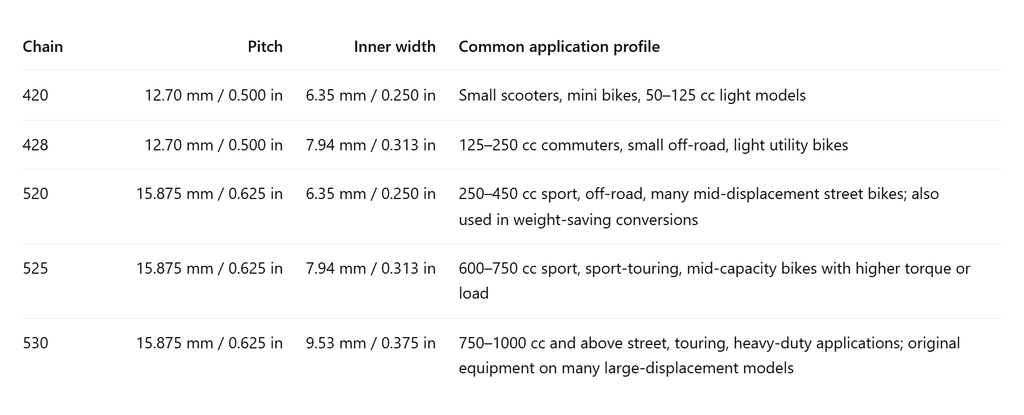
Source dimensions follow common motorcycle chain standards; always confirm by the existing chain stamp, sprocket specification and model year.
How to choose 520/525/530
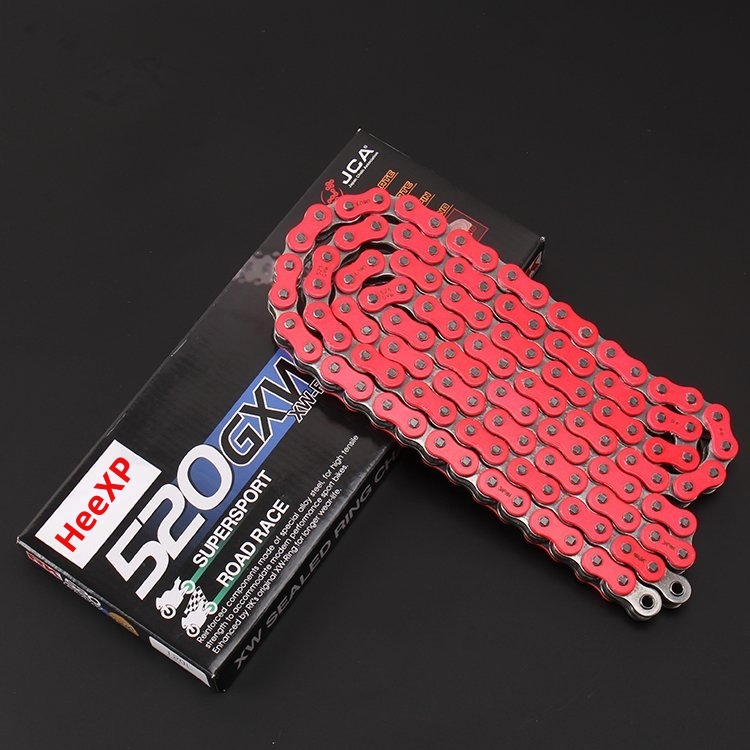
- 520: Lighter, good for performance and off-road.
- 525: Balanced, great for daily street riding.
- 530: Stronger, best for heavy touring and big torque.
- Tip: Always check your owner’s manual first.
2、When to replace the whole set
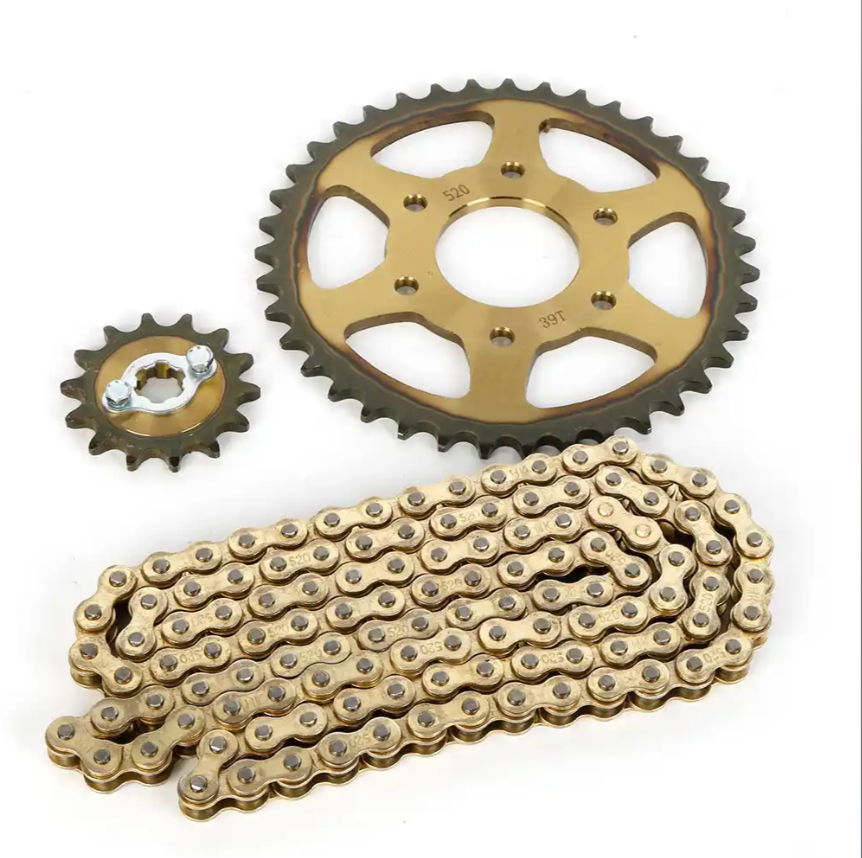
Replace the chain and sprockets together when you notice:
- The chain is stretched or stiff.
- Sprocket teeth look sharp like shark fins.
- The chain keeps falling off or slapping.
3. Common lubrication mistakes
- Mistake 1: Never lubricate. This causes rust and fast wear.
- Mistake 2: Using dirty oil. This creates a grinding paste.
- Mistake 3: Over-lubricating. Excess oil attracts sand and dirt.
- Mistake 4: Spraying on brakes or tires. This is dangerous.
- Mistake 5: Ignoring chain tension. Too tight breaks bearings; too loose jumps off.
4. Quick maintenance tips
- Clean and lube every 300-600 miles.
- Check tension every month.
- Use proper chain cleaner and lube.
- Wipe off extra oil after applying.
520, 525 and 530 are not “better-to-worse” grades. They are different engineering packages: 520 for lighter weight and performance, 525 for balanced mid-capacity load, 530 for heavier torque, touring and long service intervals. Choose by original specification first, then by torque, vehicle weight, climate and maintenance discipline. Replace chain and sprockets together when elongation, shark-fin teeth, stiff links or seal damage are present. Finally, sell lubrication as a system: safe cleaner, sealed-chain lube, correct tension and market-specific intervals.